Hyaron Skin Booster
Hydration starts beneath the surface
Discover Hyaron, a sodium hyaluronate-based injectable widely used in professional skin-rejuvenation and hydration protocols.
Built around the hydrating properties of hyaluronic acid, Hyaron is a skin-quality treatment rather than a traditional volumizing dermal filler. Its non-cross-linked formulation suits professional aesthetic procedures that improve the appearance of dehydrated, dull, rough, or tired-looking skin.
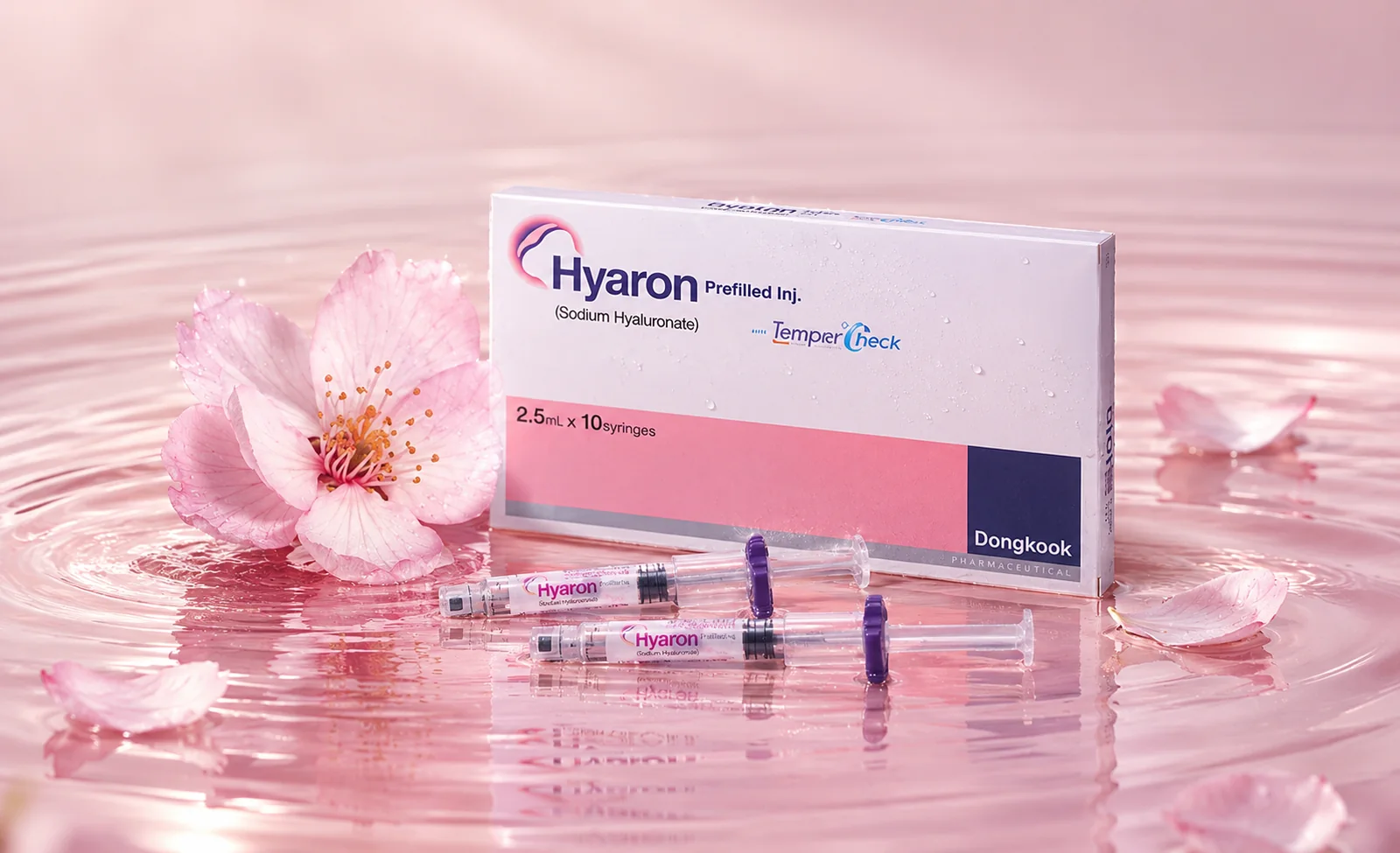
Active ingredient
Sodium hyaluronate, 25 mg per syringe
Concentration
10 mg/mL, non-cross-linked
Common packaging
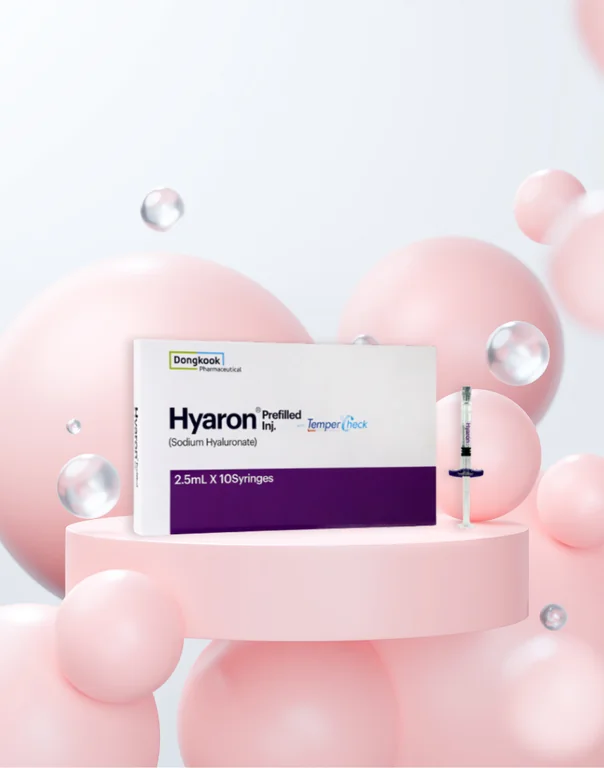
2.5 mL × 10 prefilled syringes
Manufacturer
Dongkook Pharmaceutical, South Korea
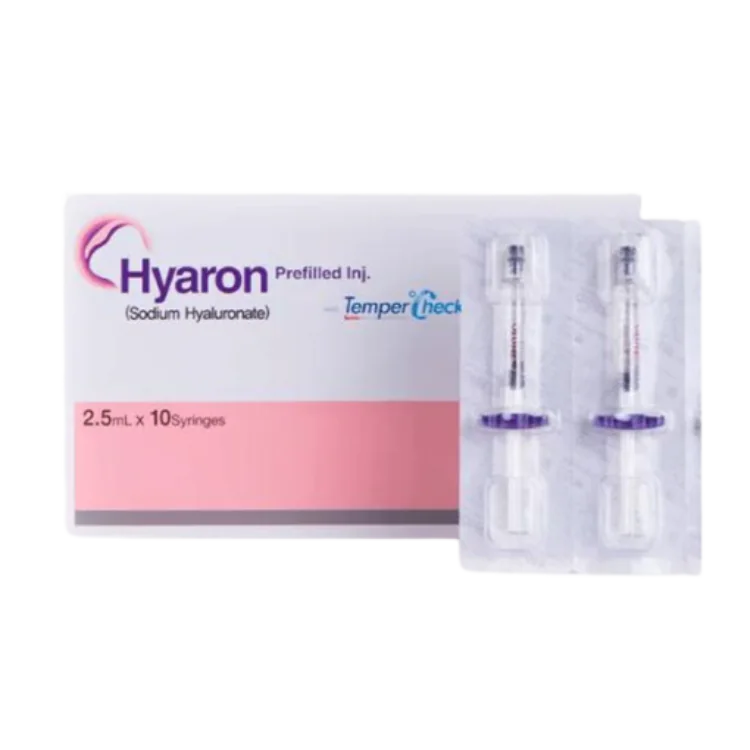
Hyaron at a glance
Targeted hydration. Refined skin quality.
Hyaron contains 10 mg of sodium hyaluronate per mL, a form of hyaluronic acid known for attracting and retaining moisture.
Unlike conventional dermal fillers that primarily restore facial volume or reshape contours, Hyaron is described as a skin booster for improving overall skin hydration, smoothness, elasticity, and radiance. Hyaron can also be administered therapeutically for conditions such as degenerative osteoarthritis of the knees and shoulder periarthritis.
Why professionals choose Hyaron

Deep hydration
Helps replenish moisture within the skin for a smoother, fresher-looking complexion.
Skin revitalization
Designed for professional skin-rejuvenation protocols focused on overall skin quality.
Improved skin texture
Supports a smoother appearance in skin affected by dryness and dehydration.
Natural-looking results
A skin-quality approach rather than a volume-heavy contouring treatment.
Korean aesthetic technology
Hyaron is associated with Dongkook Pharmaceutical, a South Korean pharmaceutical manufacturer.
Convenient prefilled format
The commonly distributed aesthetic-market presentation contains prefilled syringes for professional administration.
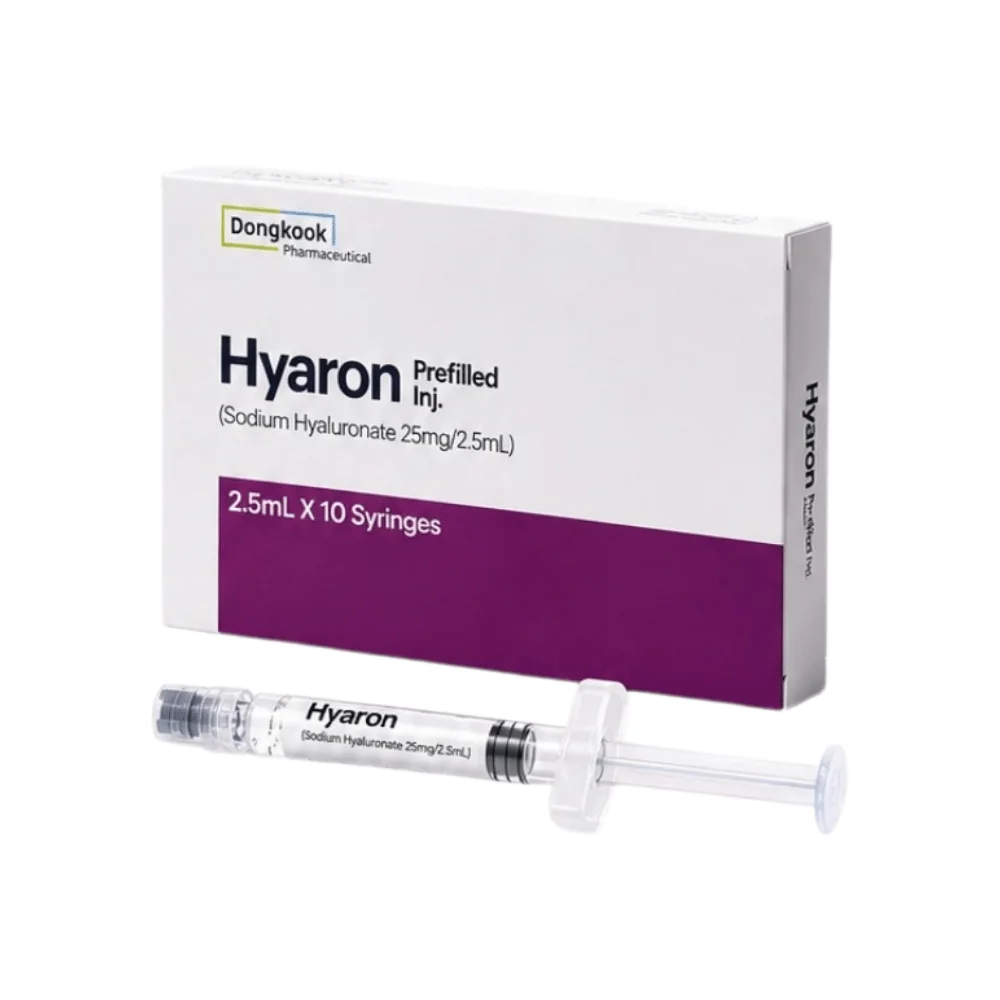
What is Hyaron?
Hyaron is a sodium hyaluronate injectable used in professional aesthetic treatments. Sodium hyaluronate is the salt form of hyaluronic acid; it penetrates deeper and is more stable, making it well suited to skin barrier protection and repair.
The aesthetic-market version of Hyaron is formulated as a non-cross-linked sodium hyaluronate. Because it does not have the same structural characteristics as cross-linked dermal fillers, it is generally positioned around skin hydration and revitalization rather than facial contouring or substantial volume enhancement.
When added to a personalized professional treatment plan, Hyaron may be selected for patients seeking improvements in the appearance of dry, dull, dehydrated, or less elastic skin.
Hyaron vs. traditional dermal fillers
The two categories serve different aesthetic goals: one works on the quality of the skin, the other on the shape of the face.
Hyaron
Non-cross-linked sodium hyaluronate placed in the superficial layer, about 1 mm deep, at even points about 1 cm apart. Primarily focused on skin hydration and quality.
Traditional dermal filler
Usually cross-linked hyaluronic acid, primarily focused on volume and contour, and designed for structural support and projection.
Schematic illustration, not to scale. Injection depth and technique are determined by the treating professional.
| Attribute | Hyaron | Traditional dermal filler |
|---|---|---|
| Primary focus | Skin hydration and quality | Volume and contour |
| Material | Sodium hyaluronate-based | Usually cross-linked HA |
| Typical use | Skin-booster and mesotherapy protocols | Facial augmentation and correction |
| Designed for | Overall skin revitalization | Structural support and projection |
| Result | Subtle, skin-quality approach | More noticeable volumizing effect |
Hyaron should not be presented as a replacement for a conventional dermal filler.
Best applications of Hyaron
Hyaron may be considered as part of a professional aesthetic treatment plan for individuals concerned about:
- Dry or dehydrated skin
- Dull-looking complexion
- Rough or uneven skin texture
- Early visible signs of skin aging
- Fine lines associated with dehydration
- Reduced-looking skin elasticity
- Loss of skin radiance
- Overall skin quality
A qualified healthcare professional should determine whether the product is appropriate based on the patient’s medical history, skin condition, treatment goals, and the product’s approved use in the relevant country.
Where Hyaron is applied
Face
For overall hydration, radiance, and skin-quality improvement.
Neck
For skin that appears dry, thin, or less elastic.
Décolletage
For improving the appearance of dehydrated or sun-exposed skin.
Hands
For areas showing visible dryness or age-related changes.
Product highlights

Sodium hyaluronate
A hyaluronic-acid-derived ingredient associated with moisture retention and skin hydration.

Non-cross-linked formulation
Commonly described as non-cross-linked, distinguishing it from many structural HA fillers.
Prefilled syringe
Supplied in prefilled syringes for professional administration.

Korean origin
Manufactured with Dongkook Pharmaceutical Co., Ltd. technology in South Korea.

Skin booster positioning
Marketed internationally as an injectable skin booster for hydration and skin revitalization.
Choose Hyaron for your aesthetic needs
Simple formulation. Focused skin rejuvenation.
Hyaron takes a straightforward approach to injectable skin revitalization by focusing on sodium hyaluronate and hydration.
For professionals seeking a skin-booster option rather than a traditional volumizing filler, Hyaron provides a formulation commonly incorporated into professional mesotherapy and skin-rejuvenation protocols.
Ready to explore Hyaron?
Discover the product specifications, formulation, packaging, and professional-use information.
Important information
Hyaron is an injectable product intended for professional use. Product classification, indications, formulation, packaging, and permitted uses may vary by country and market.
The information presented on this website is provided for educational and product-information purposes. It should not replace the official product labeling, instructions for use, or advice from a qualified healthcare professional.
Do not self-administer injectable products.